
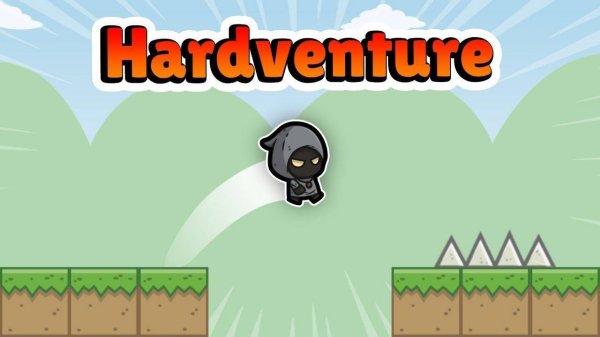
Stealth Trail Runner
Reviews
Stealth Trail Runner stands out in the crowded platformer genre by focusing entirely on environmental navigation rather than combat. The hand-painted visuals give each world a distinct personality, and the trap designs are clever without being unfair. Controls are responsive, and the gradual difficulty curve ensures players of all skill levels can enjoy the experience. The absence of any violent content makes it a rare gem for family gaming sessions. While the core loop is simple, the level of polish and thoughtful design keeps it engaging throughout.
About this game
Worlds Built Like Living Paintings
Each environment in Stealth Trail Runner is designed with a hand-painted aesthetic that makes every screen feel like a piece of art. From lush forests with dappled sunlight to icy caverns with glittering stalactites, the visual style draws players into a world that feels both whimsical and dangerous. The backgrounds shift as you progress, offering new color palettes and atmospheric details that keep the experience fresh. These worlds are not just backdrops—they are active participants in the challenge, with elements that react to your movements.
Traps That Test Your Awareness
The core challenge comes from environmental hazards that require sharp observation. Floor tiles may look solid but give way underfoot. Spikes emerge from walls at unpredictable intervals. Bouncing obstacles follow patterns that you must learn to navigate. There are no enemies to fight; the only opponent is the level itself. This design encourages players to slow down, study each area, and plan their route before moving. Success depends on reading visual cues and remembering trap placements from previous attempts.
Controls Built for Precision
The control scheme is simple: move left or right, and jump. But mastering the timing of each jump is where the depth lies. Platforms may be spaced at distances that require a running start, or they may crumble after a single touch. The jump height is fixed, so positioning becomes critical. Players must learn to judge distances quickly and commit to their moves. There is no room for hesitation on narrow ledges, yet rushing leads to mistakes. This balance makes each successful crossing feel earned.
Progression Through Patience
Levels are arranged in a linear sequence, but the difficulty ramps up gradually. Early stages introduce one trap type at a time, allowing players to build confidence. Later levels combine multiple hazards in tight spaces, requiring split-second decisions. Checkpoints appear at key moments, reducing frustration while maintaining tension. The game rewards players who take the time to learn each section rather than those who try to power through. This design philosophy makes it accessible to younger players while still offering a satisfying challenge for adults.
Family-Friendly Challenge Design
Stealth Trail Runner avoids any violent or mature themes entirely. The focus is on problem-solving and motor skills, making it suitable for players of all ages. Parents can feel comfortable letting children play, as there is no combat, no scary imagery, and no complex narrative. The game is purely about navigating from point A to point B using skill and observation. This simplicity is its strength—it invites repeated play as players try to improve their times or find hidden paths.










Comments
Sign in to leave a review
No account? Create one
No comments yet.